
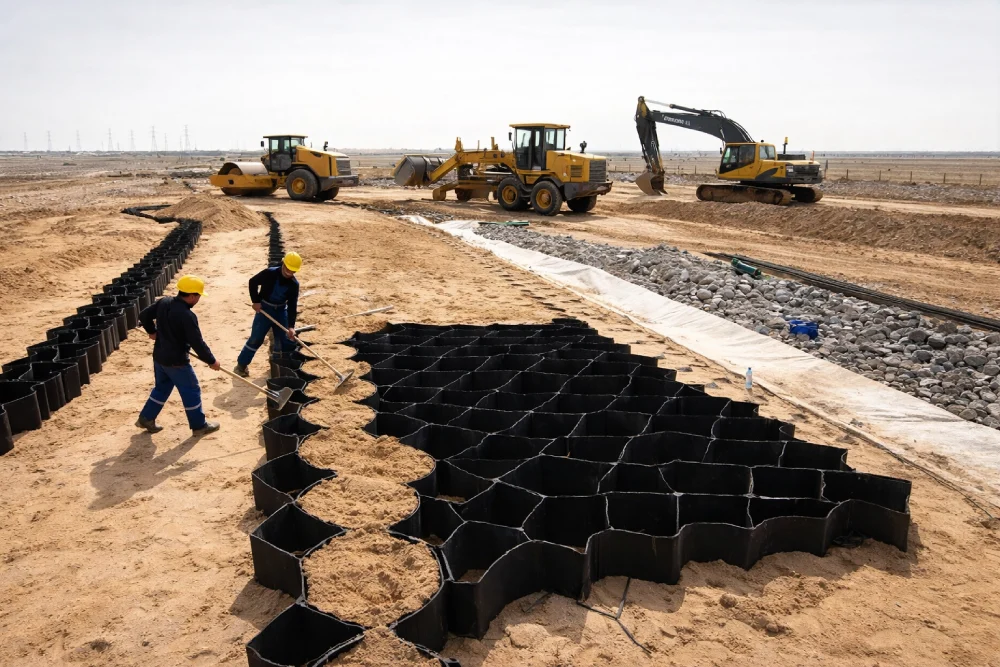
30-Second Overview
One of the best ways to make your construction more durable is through geotextile fabrics. But to better understand their usage, you need to explore their applications.
Here are the most common ways these geotextile fabrics are used:
- Stabilizing Roads during construction
- Slope stabilization and erosion control
- Separation of soil layers
- Reinforcing loose soil
- Filtering water in drainage systems
- Protecting Structures
- Improving drainage flow
Understanding these benefits of geotextile fabrics in detail is the best way to make the right choice for your own project. Geotextile fabrics are known for their incredible benefits within the construction industry.
Why? It is mainly due to their strength and resilience in the face of environmental factors. Made from strong fibers, these geotextile fabrics can extend the life of most construction projects.
The trick behind its effectiveness is making the right choice. Choosing the right geotextile will depend on your understanding of how they are actually used in reality.
To help in making your decision, I have created this detailed guide. It provides the top seven uses of geotextile fabric in straightforward terms.
This will help you identify the different ways your geotextile fabric can help in your construction.
Ready to learn something new? Let’s get started!
What are the main types of GeoTextiles?
Let’s compare the two main types of geotextile fabrics against each other:
| Type | Best For | Why It Works |
| Woven Geotextile | Adding strength and keeping layers apart | Strong, holds heavy loads easily |
| Non-Woven Geotextile | Draining water and filtering soil | Filters large particles, lets water pass through |
Uses of Geotextile Fabric
Here are the most popular uses of geotextile fabrics in construction today:
1. Building Stronger Roads
In most modern roads, you will find a sheet of geotextile fabric separating the soft soil from gravel. This sheet prevents gravel from sinking into the loose mud at the bottom.
It also prevents potholes from developing and dramatically increases the strength of the road. This leads to savings in the annual maintenance costs of such roads.
Moreover, geotextile fabrics also prevent the inner layers of the pavement from rotting.
2. For Erosion Control
Slopes and riverbanks face a constant issue. It involves water and wind eroding the topsoil layer.
This leads to harmful effects on the environment and prevents vegetation growth.
Using geotextiles, construction companies can create a protective layer beneath this soil. Its strong fibers hold the soil in place and prevent it from moving.
This stabilizes the area and prevents erosion. Using heavier fabrics or geo bags, this protection becomes far stronger than simply pouring concrete.
3. Separating multiple layers of soil
As a strong, resilient fabric, geotextile is a great way to separate two materials and prevent mixing. It divides such layers and prevents them from mixing over time.
With this strong barrier in place, soil becomes more stable and lasts significantly longer. This is particularly beneficial for sports fields and parking lots, where heavy use can weaken the ground.
4. Strengthening Retaining Walls
When constructing a steep slope or retaining wall, you need to strengthen the soil for better support.
With high-strength fabrics, creating such a reinforced block becomes easier than ever.
In this application, geotextiles provide a sturdier foundation for these sloped walls.
Their benefits provide support against high amounts of pressure.
5. Filtering Soil in Drainage Systems
Drainage often gets blocked with soil and other impurities. To prevent this from happening, a filter is needed between the pipes and the water.
The best way to prevent this from happening is to use a nonwoven geotextile fabric. These sheets act as a kitchen sieve, allowing only water to pass through.
This increases the lifespan of your drainage system. It helps protect your structure from water damage.
6. Providing New Drainage Pathways for Water
Beyond simply filtering water, geotextiles can also be used to divert its flow.
Since non-woven fabrics are permeable, water can easily flow through their surface. Using them in drainage systems reduces the water pressure that can form in retaining walls.
It provides an easy escape route for water, preventing the water’s high velocity from destroying your entire drainage system.
7. Acting as a Protective Cushion
For projects like artificial ponds and reservoirs, a delicate waterproof geomembrane is used. These prevent the water from seeping into the soil outside the water containment.
The problem is that the membranes are quite fragile and prone to punctures. To ensure that the pond does not leak altogether, nonwoven geotextile fabric is used as a protective measure for the membranes.
These geotextiles will ensure that sharp rocks and tree roots do not harm the membrane in the future. These serve as shields for such liners and provide a better life for such artificial water bodies.
Choosing the Right Geotextile for Your Purpose
Make sure you choose only the correct type of geotextile fabric for your project. Refer to this list below to make the right choice:
| Use Case | Primary Function | Recommended Geotextile Type | Key Benefit |
| Roads & Parking Lots | Stabilization & Separation | Woven | Prevents rutting, extends pavement life |
| Erosion Control on Slopes | Protection & Filtration | Non-Woven | Holds soil, promotes vegetation |
| French Drains & Filters | Filtration | Non-Woven | Allows water flow, prevents clogging |
| Retaining Walls | Reinforcement | Woven | Adds tensile strength to the soil mass |
| Landfill Liners | Protection & Drainage | Non-Woven | Cushions and protects geomembranes |
Conclusion
Applications of geotextile fabric are quite diverse and useful. Geotextile fabrics are engineered products that play a substantial role in determining the durability of modern construction.
But to ensure their success, you must select the right fabric for your use. Whether it’s woven or non-woven, the type of fabric will determine the success of your project.
After you make your choice, it’s time to select the best geotextile manufacturer for your project needs.
My recommendation? Choose GeoSource for your project’s success.
They are seasoned suppliers of Geotextile Fabric and are known for offering excellent support to their clients. If you require technical or after-sales support, GeoSource can assist you.
Moreover, their wide range of geotextile products and international logistics will fulfill your every need. For long-term success, there is really no other alternative as efficient as GeoSource.
Ready to build a sustainable future for your next project? Contact the experts at GeoSource today!
FAQs
1. What is geotextile fabric?
Geotextile fabric is a strong, permeable synthetic material, like a durable textile, used in construction and civil engineering. It is designed to be placed in soil to perform key functions such as separation, filtration, reinforcement, drainage, and erosion control. This makes it one of the most versatile geosynthetic applications for stabilizing ground.
2. What are the main uses of geotextile fabric?
The primary uses of geotextile fabric include stabilizing roads and driveways, controlling erosion on slopes, separating soil layers, reinforcing retaining walls, and filtering water in drainage systems. These geotextile applications are essential for creating durable and long-lasting infrastructure and landscaping projects.
3. How do I choose the right geotextile fabric supplier?
When looking for geotextile fabric suppliers, choose companies that offer technical support, a range of woven and non-woven products, and materials that meet quality standards. A reliable supplier will help you select the correct fabric for your specific project needs, ensuring optimal performance for your intended geotextile uses.
4. What are the different types of geotextile fabric?
The two main types are woven geotextile fabric and non-woven geotextile fabric. Woven fabrics are made from interlocking yarns and are best suited for high-strength applications such as road stabilization. Non-woven fabrics are made from bonded fibers and excel at filtration, drainage, and protection tasks.
5. Why should I use geotextile fabric in road construction?
Using geotextile fabric in road construction provides separation between the soft subsoil and the gravel base. This prevents the materials from mixing, which is a leading cause of potholes and rutting. This key use of geotextile significantly extends the road’s lifespan and reduces maintenance costs, offering a high return on investment.