
These days, road construction involves using appropriate materials to make roads stronger. Without it, the road will sink and lose its stability in just a few years. This will result in the road developing potholes sooner rather than later.
In every modern road, geotextiles have thus become a necessity. They are the silent guardians that make every road last longer. Not only that, but geotextiles used in road construction also reduce maintenance costs.
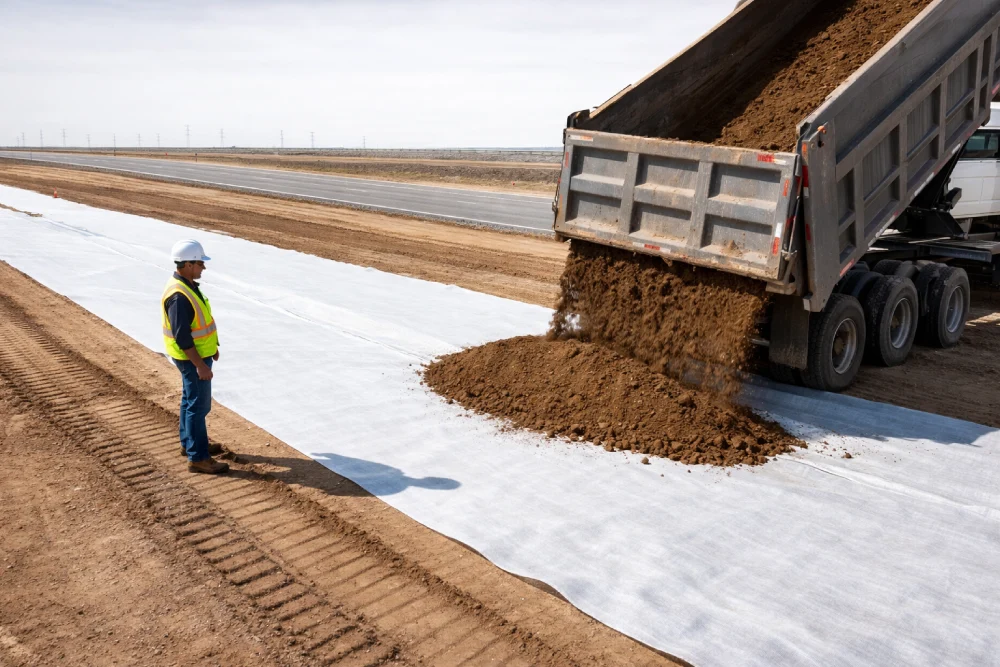
Don’t know what a geotextile is? Essentially, it is a super-strong blanket that goes directly on top of the soft soil. The idea is to lay it directly under the gravel to cover the soil. It is a high-tech material that helps prevent road deterioration.
Curious for more? Let’s break down what these geotextile fabrics achieve during road construction. Their benefits and applications will help you understand precisely why they are the preferred choice of road construction companies.
What Are The Functions Provided By Geotextile Fabrics?
Geotextiles are fabrics designed to enhance the quality of your road construction. Here is how they function:
| Function | What It Means (In Simple Terms) | The Problem It Solves |
| Separation | Keeps different layers apart. | Prevents gravel from sinking into soft soil and soil from mixing up into the gravel. |
| Stabilization | Creates a firm, locked-in platform. | Spreads weight evenly, preventing the road from deforming under heavy loads. |
| Filtration | Let’s water through, but holds soil back. | Prevents drainage systems from clogging with silt, keeping the road base dry. |
| Reinforcement | Adds tensile strength to the soil. | Helps weak soil carry heavier loads, reducing rutting and settlement. |
Geotextiles in road construction thus provide both separation and stabilisation to the core foundation. They combine these benefits to offer higher strength with lower maintenance costs.
Woven vs. Non-Woven: Which One Should You Choose?

To ensure the right application, choose the right geotextile for your needs.
Here are the two main types of geotextiles in road construction you can choose from:
1. Woven Geotextiles
These are geosynthetics in road construction that are made by weaving strong fibres together. This creates an incredibly strong fabric that is resistant to tearing and separation.
Woven geotextiles are primarily used to stabilise and reinforce roads. Whether it’s for a highway or a parking lot, woven geotextiles for road construction are very beneficial. They provide an easy way to strengthen roads and prevent weak soil at the bottom from undermining their stability.
2. Non-Woven Geotextiles
Non-woven geotextile fabric for road construction is made by bonding fibres to create a felt-like fabric.
Compared to woven geotextiles, they are weaker. Their main purpose is not provide strength, but enable better filtration and drainage. You will often find these in drainage trenches along roads to manage water flow.
Where Are Geotextiles Used in Road Construction?

The applications of geosynthetics are wide and incredibly varied. They are used in both the construction of new roads and the management of old ones.
Some of the most popular applications of geotextiles in road construction include:
● New Road or Highway Construction
They are placed directly on weak soil before the gravel base is added. This is the most common use of such geotextiles, which help improve road stability.
● Unpaved or Access Roads
For unpaved roads such as farm tracks or temporary access roads during construction, geotextiles are key. They reduce maintenance of these short-term roads by evenly distributing the weight of heavy equipment.
● Parking Lots & Driveways
Geotextile fabrics for roads are important for preventing potholes and cracks in all paved surfaces you see in your daily life.
● Road Rehabilitation
Geosynthetics in road construction help prevent future cracks in rehabilitated roads. They act as a barrier between the old, cracked asphalt and the new layer poured above.
Advantages of using Geotextiles in Road Construction

Using woven geotextiles for road construction offers multiple long-term benefits. These include:
- Longer life by preventing layers from mixing with each other or with water for added stability.
- Reducing maintenance and repair costs by preventing potholes from forming each year.
- Allowing a thinner layer of gravel to be applied, saving material costs.
- Enables working with soft soils that would otherwise require expensive, lengthy preparation.
- Improves the project’s durability and sustainability by reducing quarrying.
Conclusion
It is no surprise that geotextile fabrics are the future of durable road construction. They form the hidden layer that keeps our roads smoother and safer.
Geotextiles in road construction are also one of the best examples of smart engineering. They are inexpensive and incredibly useful for strengthening any road on a budget.
Interested in saving on time, money, and resources on your next road construction? I recommend partnering up with a dedicated geosynthetics manufacturer like GeoSource.
They are a verified industry expert who can provide greater reliability and guidance on the use of geotextiles in road construction. Moreover, their experts will happily guide you in selecting the right solution to your project’s challenges.
Contact the GeoSource team today and get a trusted geotextile manufacturer to guide you on your next construction project.
FAQs
1. What is the main purpose of geotextiles in road construction?
The main purpose of geotextiles in road construction is to separate different soil layers and stabilize the foundation. This prevents mixing soft subgrade soil with the gravel base, a primary cause of potholes and road failure.
2. What type of geotextile is best for road stabilization?
Woven geotextiles for road construction are typically the best choice for stabilization and reinforcement. Their high tensile strength provides a stable platform that evenly distributes traffic loads, preventing rutting and deformation in the road base.
3. How do geotextiles save money on road projects?
Using geotextile fabric for roads saves money by extending the pavement’s lifespan and drastically reducing long-term maintenance costs. It also allows for a thinner aggregate base in some designs, leading to significant material savings.
4. Are geosynthetics only used in new road construction?
No, geosynthetics in road construction have multiple applications. They are crucial for new roads but are also widely used to rehabilitate old roads, where they act as a barrier to prevent cracks in the old pavement from damaging the new surface.
5. What should I look for in a geotextile manufacturer?
When choosing geotextile manufacturers, look for companies with strong technical support, proven product quality (with relevant certifications), and experience in providing solutions tailored to specific soil conditions and project requirements.