In the varied world of civil engineering, one thing remains constant: The strength of every structure depends upon its foundation.
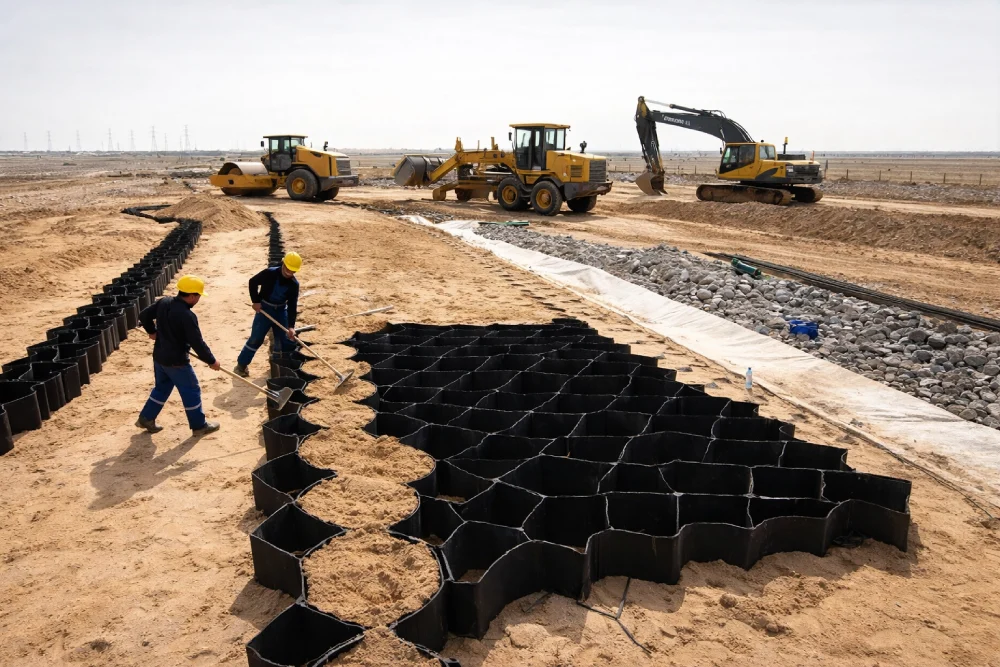
Much of this strength is achieved through the use of geotextiles in present-day construction projects. These man-made fabrics go unseen yet provide essential structural support.
What do these geotextiles achieve? Mainly, they are used for important applications such as soil stabilization and water control.
Their ability to perform these tasks depends entirely on the type of geotextile you choose for construction.
This guide discusses the importance of selecting the appropriate types of geotextile to achieve improved durability and performance. We shall also categorize the usual geotextile materials used during such construction.
This understanding will help you identify the best types of geotextile fabric for your future project.
Let’s begin by first understanding more about their materials.
What Are Geotextiles Made Of?
It is very important to understand exactly what makes modern geotextiles so durable and useful during construction.
Such types of geotextile consist of synthetic polymers, which are the main source of their durability and resistance.
The following are the two most popular types of materials used to produce these geotextile fabrics:
● Polypropylene:
This is the most commonly used type of geotextile. It allows better protection of the fibers against both water and chemicals.
Since polypropylene is highly strong, it also increases the geotextile’s durability. This results in significantly reduced project costs.
● Polyester:
Unlike polypropylene, polyester shows high tensile strength. This means that, although slightly weaker, it can withstand higher levels of UV radiation.
Most commonly, this type of geotextile is used for long-term applications and outdoor projects.
Main Types of Geotextile Fabric
There are mainly three types of geotextiles used for different construction applications. These vary based on their physical properties and benefits.
Here is a quick overview of the different types and their functions:
| Type | What It’s Like | What It’s Best At | Best For Projects Like |
| Woven | Strong, grid-like fabric | Soil separation & reinforcement | Roads, parking lots |
| Non-Woven | Soft, felt-like fabric | Water filtration & drainage | Drainage systems, slope protection |
| Knitted | Flexible, net-like fabric | Conforming to uneven surfaces | Complex slope stabilization |
1. Woven Geotextiles
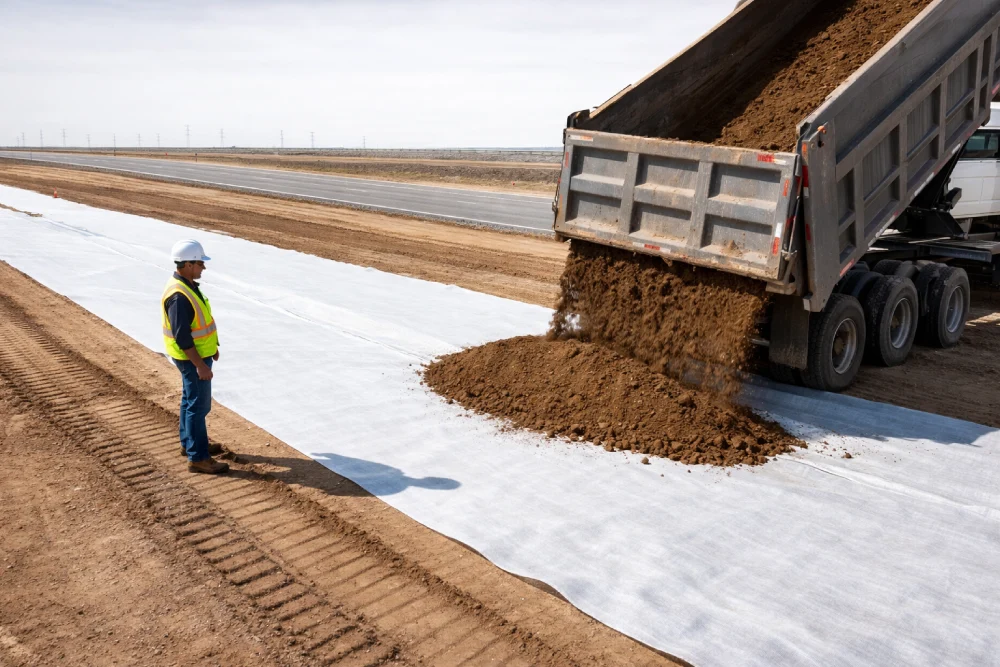
These are specifically engineered for reinforcing soils during a construction project. Their tightly woven structure provides increased strength to the ground beneath.
Woven geotextiles also prevent soil layers from mixing. Layers such as soft subsoil and gravel road base are retained to enhance the durability of the road construction.
They are a great option for stabilizing weak grounds, including roadways and large parking lots.
2. Non-Woven Geotextiles
Non-woven geotextiles are softer in their texture. This is because they are made up of tiny pores. This allows them the ability to filter water through them.
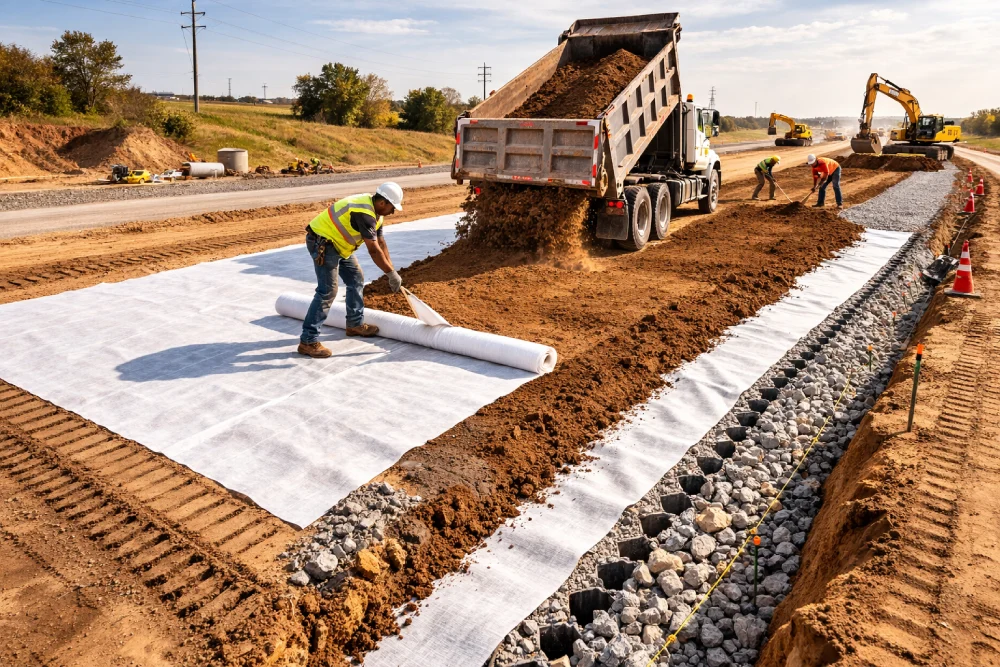
This ability makes them a great option for subsurface drainage systems. Allowing only water to pass through them, they can filter out soil and dirt, preventing clogs.
Nonwoven geotextiles are also used to protect landfill lining systems and to control erosion on slopes.
3. Knitted Geotextiles
The looped construction of knitted geotextiles offers greater versatility in shape and size. This allows it to be used for special purposes that require a uniquely shaped geotextile for the project.
Knitted geotextiles are mainly used for specialized erosion control where normal geotextiles cannot be applied.
Advanced Geotextile Types: Composite and High-Performance
In geotextile applications that carry complex challenges, manufacturers create advanced products like:
● Composite Geotextiles
This is the combination of two or more geosynthetics. It mainly involves using a woven fabric for strength and a non-woven layer for filtration. This allows two benefits to be merged into a single product.
● High-Strength Geotextiles
These geotextiles are specifically designed to withstand high loads and exhibit remarkable tensile strength. They are used in the construction of steep embankments and reinforced soil walls.
Conclusion: Choosing the Right Types of Geotextile
Selecting the right geotextile type requires asking your supplier the right questions about your needs. Consider getting clarity for important factors like:
- What is the main function you need to use the geotextile for?
- What are the exact site conditions of your construction?
- What are your specific requirements for the geotextile?
However, simply understanding your requirements is not enough. You also need the right partner who can satisfy your needs.
For verified technical support and guaranteed product reliability, I recommend partnering up with GEO Source.
They are a leading provider of geosynthetic solutions. These solutions include a wide range of high-performance woven and nonwoven geotextiles.
GEO Source also deploys a team of experts who will work alongside you in your construction project.
This will further help you in selecting the appropriate geotextile fabric for your project. The experts will also guide you in your installation process for durable results.
Ready to find the right geotextile for your next construction project? Contact GEO Source today and receive a free technical consultation!
FAQs
1. What are the main types of geotextiles?
The main types of geotextile fabric are woven geotextiles, non-woven geotextiles, and knitted geotextiles. Each is made from durable geotextile materials, such as polypropylene, for various construction applications.
2. What is a woven geotextile used for?
Woven geotextiles are used for adding strength and stability. They are perfect for separating soil layers under roads and driveways and for reinforcing weak ground. This is a key part of understanding geotextile types and uses.
3. When should I use a non-woven geotextile?
Use a non-woven geotextile when your project needs drainage or filtration. Its felt-like structure lets water flow through while filtering out soil, making it ideal for use in French drains, behind retaining walls, and for erosion control.
4. What are geotextiles made from?
Most geotextile materials are synthetic polymers. Polypropylene is the most common because it resists moisture and chemicals, while polyester is used for its high strength and better long-term durability in demanding applications.
5. How do I choose a good geotextile manufacturer?
When choosing geotextile manufacturers, look for a company that offers a full range of proven products (woven, non-woven, etc.), provides clear technical data and specifications, and can give expert advice to match the right fabric to your specific project needs.